
Emissions from Rocket Launches
Because we should also show the other side of the coin

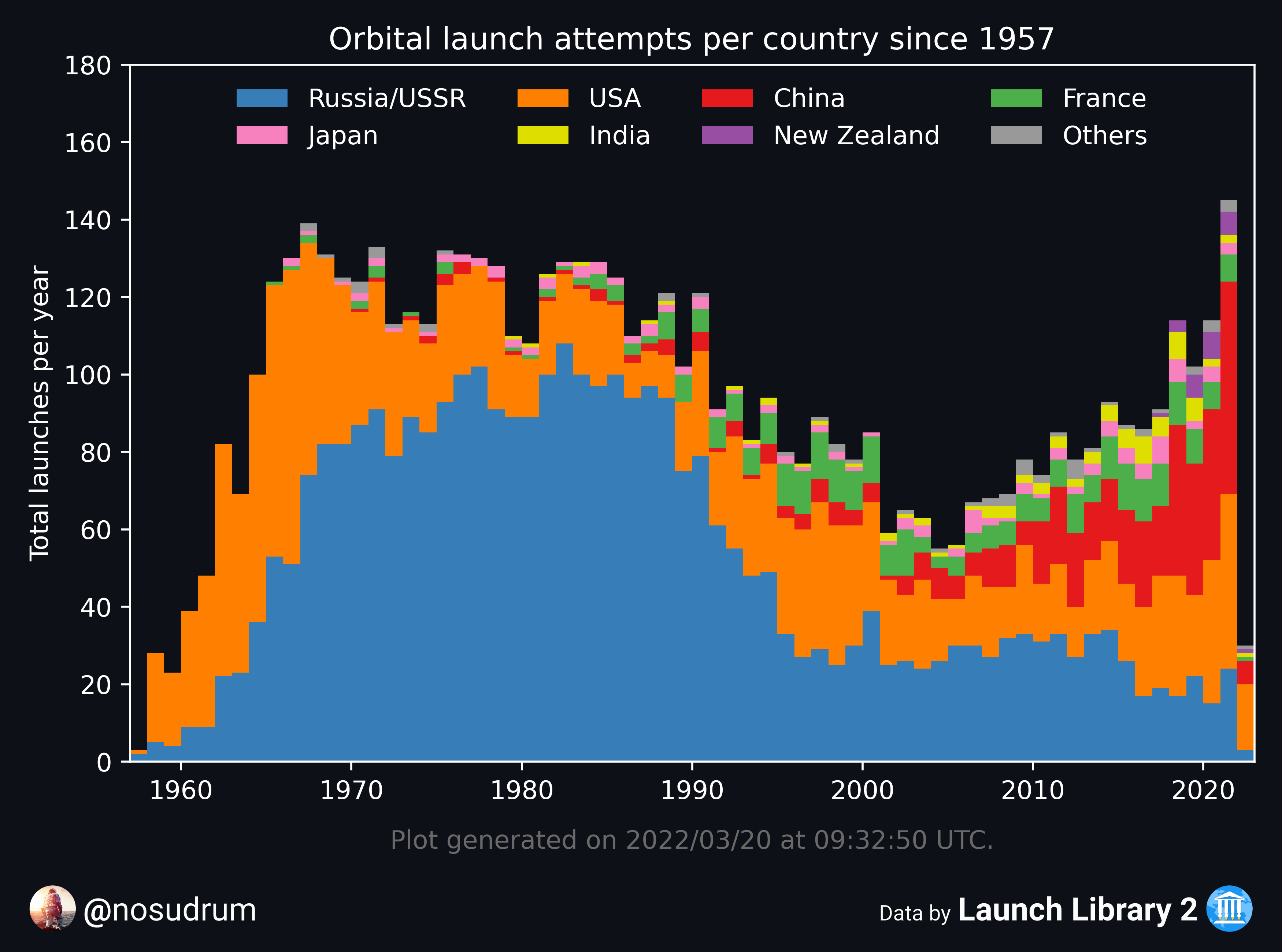
Growth of space launches
After the decrease of yearly space launches in the 90s, caused by the fall of the Soviet Union and then the end of the Space Shuttle Program, the number picked up again and it reached a new record in 2021, immediately surpassed again in 2022 with around 180 orbital launches. One-third of these 180 launches, were Falcon 9 from SpaceX (GunterSpacePage).

CO2 emissions from rocket launches compared to aviation
One Falcon 9 launch emits around 400 tons of CO2 per launch1. CO2 represents 70% of the total mass emitted, followed by 25% of water vapor. That's a bit more than an Airbus A330 round-trip flight from Paris to San Francisco (340 tons).2
However, there are around 30-40 million flights per year. This puts the space industry at about 0.01% of the total CO2 emissions from aviation (StatistaEmissionsAviation)3. Aviation alone represents around 3% of man-made CO2 emissions globally. The impact of manufacturing space launch systems is also equally very small compared to aviation (purely based on the proportion between rockets manufactured and airplanes manufactured, which usually require similar types of materials and masses).
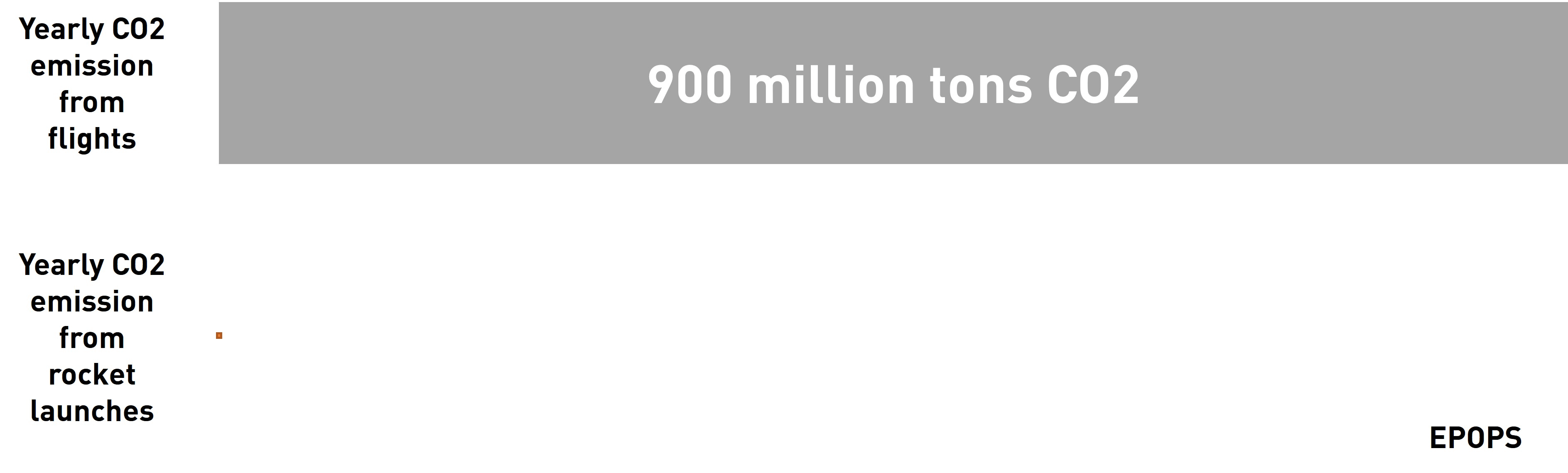
To put these CO2 emissions in perspective, the entire space industry worldwide in one year polluted almost half the CO2 emissions of private jets in Switzerland alone (166’000 tCO2 as per SwissInfoJets).
This seems to indicate that rocket launches are almost negligible compared to other sectors, but...
The problem with rocket launches’ emissions
Even though we assessed that the CO2 emitted from rocket launches is an order of magnitude smaller than other sources, the effect of rocket launches is more complex, mainly for two reasons:
•Emissions generated at higher altitudes are worse, since they can't be directly absorbed, but instead stay in the troposphere and stratosphere for longer.
•Further, rocket engines do not only emit CO2 or water vapor.
What do rockets actually pollute?
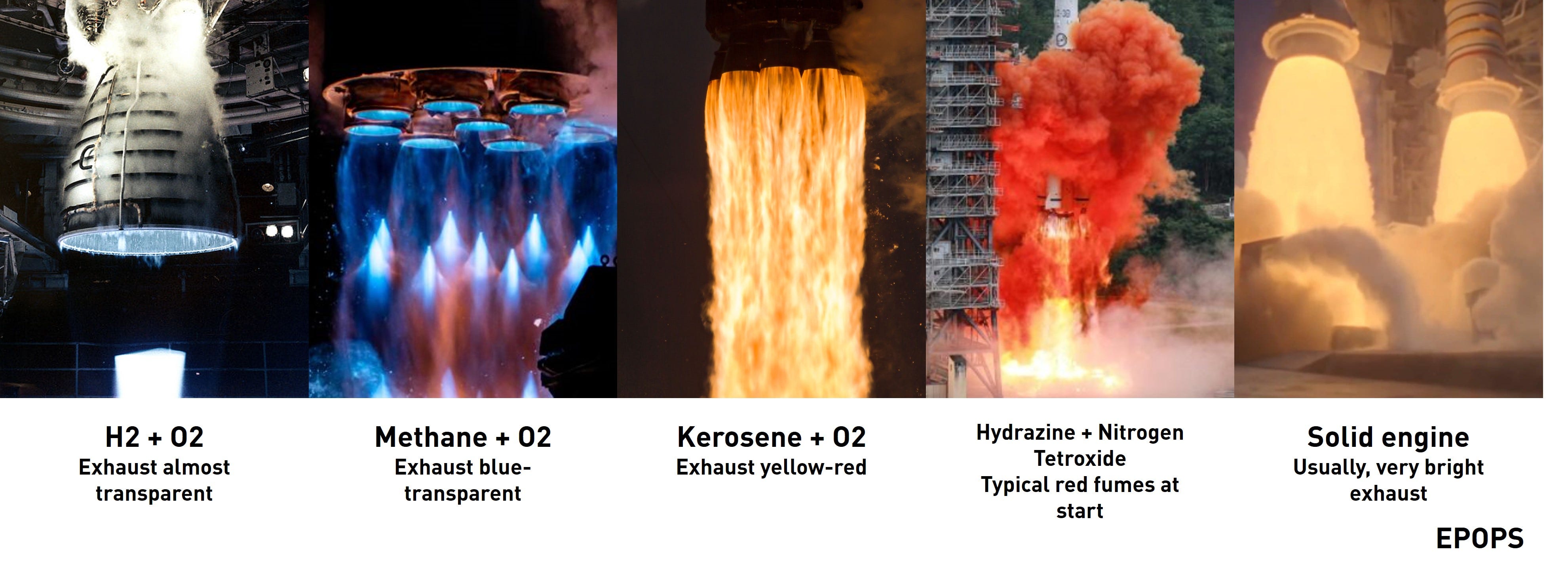
The exact pollution caused by a rocket depends on the propellants used by the rocket engine. EARocketsPollution provides a good overview. Rocket engines can generally either use a “liquid” mixture, where both oxidizer and fuel are liquids, or a “solid” mixture, where both are solids (like a firework).
The typical propellant mixtures, ordered by the “greenest” to the “dirtiest” are:
Hydrogen (H2) + Oxygen (O2): produces only water vapor (H2O)
Methane + Oxygen: only CO2 and H2O
Kerosene + Oxygen: CO2, H2O, but also soot, which we will cover later
More "exotic" mixtures, both bad but in different ways, like:
Nitrogen Tetroxide + Hydrazine
Solid rocket engines
What are the effects of some pollutants? Toxic chemicals
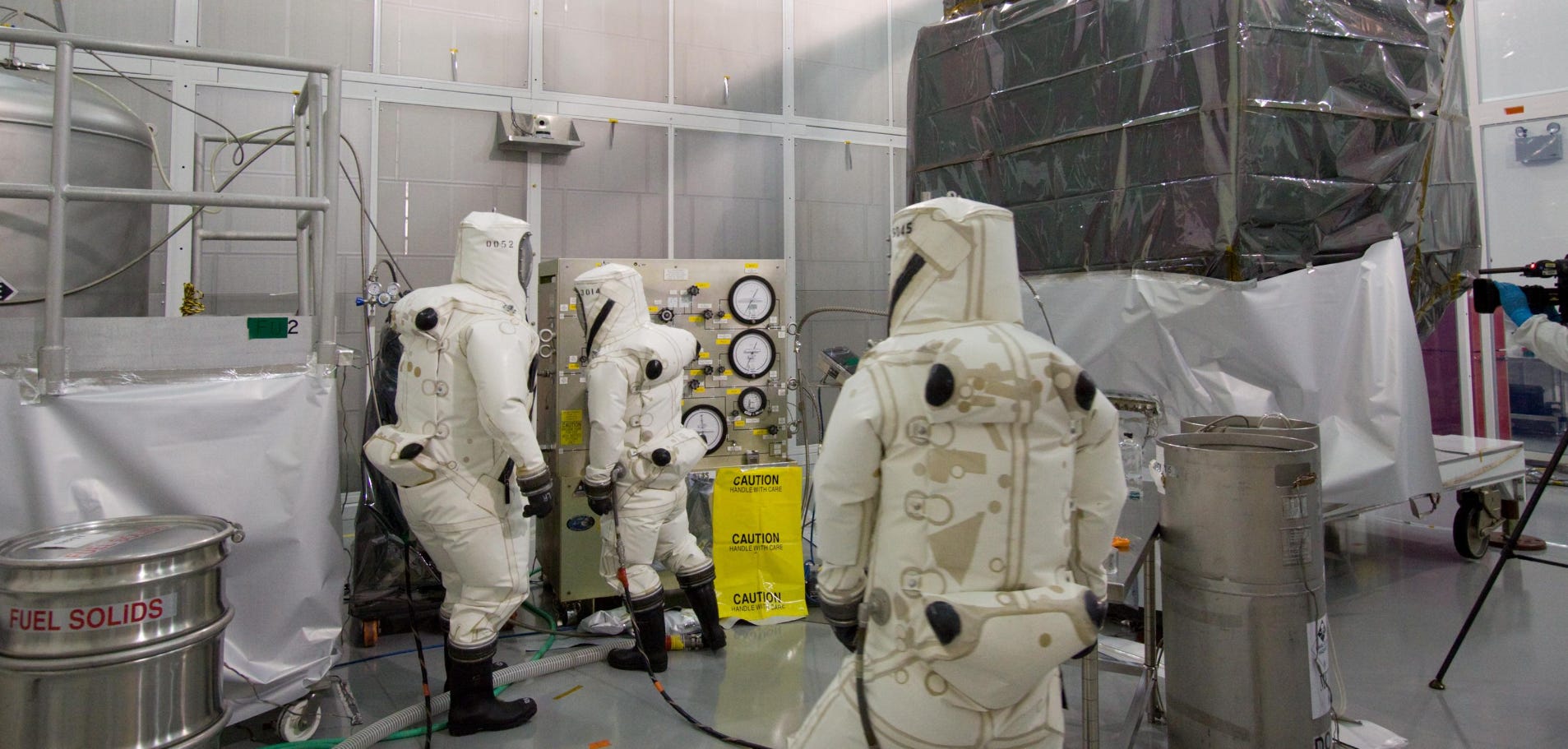
The effect of some toxic pollutants can be very strong: hydrazine is highly carcinogenic to humans and is known for polluting some areas of Kazakhstan for decades due to failed Soviet rocket launches (Carlsen2007, AbdrazakMusa2015).
Solid rocket engines often use ammonium perchlorate. Once combusted it can form hydrochloric acid, which is toxic too.
The good news is that these are not being used frequently anymore. Hydrazine is used in the west only for orbital stages (which do not get in contact with the atmosphere), and is only used by China for first stages. Since the retirement of the Space Shuttle, solid rocket engines use has declined by about 60% globally (RossSheafer2014), mainly because they don't allow propulsive and/or complete reusability (and they have lower performances than liquid engines), but they are unfortunately still used in some major rockets such as NASA's SLS and Ariane 5/6.
What are the effects of some pollutants? Radiative forcing
Radiative forcing is the change in the net radiative flux at the top of atmosphere or simply said "how much earth absorbs of the incoming sun radiation", which is a big drive in earth's warming. Certain pollutants have a higher impact than others.
Soot (also called black carbon), produced by the incomplete burn of kerosene, has a much stronger effect than CO2 or other pollutants. Even though soot represents only 2% of all rocket engine exhausts, it still constitutes 70% of the total radiative forcing from rocket launches. Soot is followed by alumina (from solid rocket engines) with 28% (RossSheafer2014). Even though H2O and CO2 account for almost 90% of the total emissions in terms of mass, they have a negligible radiative forcing effect.
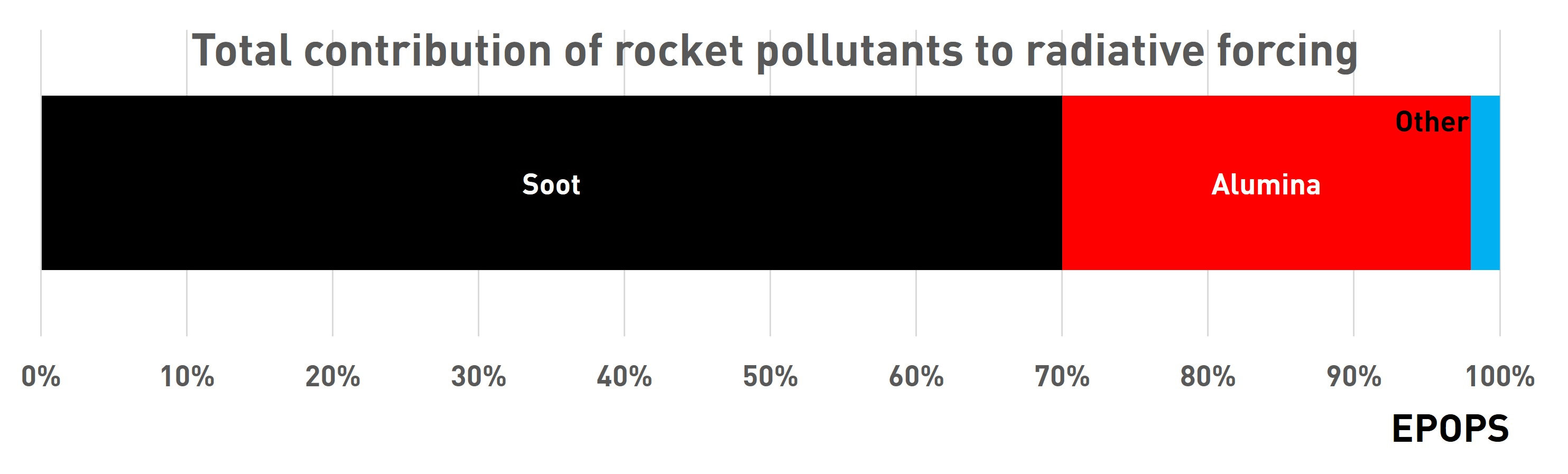
Because of soot and alumina, the radiative forcing from space launches is only 4 times smaller than that of aviation, even though the total emissions from aviation are 10'000 times higher (RyanMarais2022).
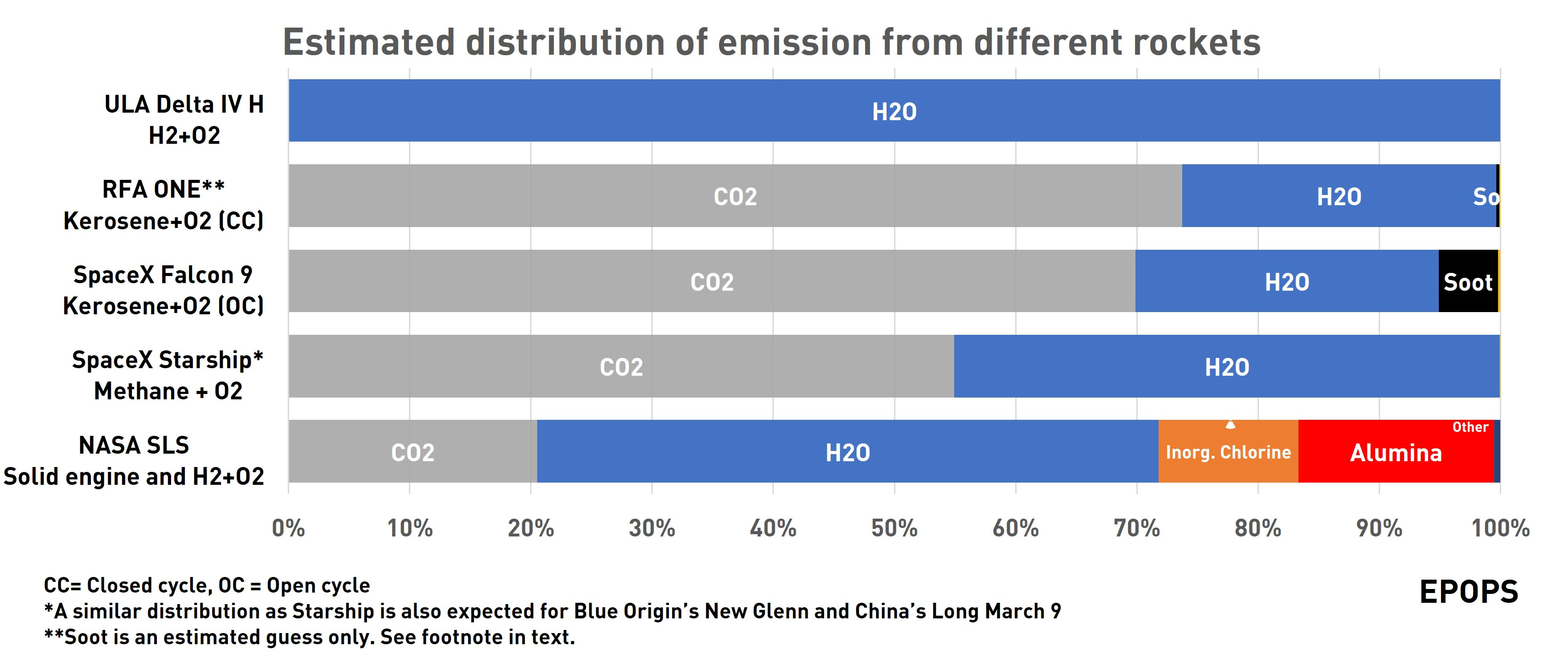
The good news is that the biggest rockets currently planned, SpaceX’s Starship, Blue Origin’s New Glenn, and China’s Long March 9 (WikiLM9) are all reusable methane fueled with no soot or alumina emissions, and many launchers startups that still use kerosene as fuel, are developing engines with closed combustion cycles which emits much less soot compared to open cycles.4
Rocket emissions: Summary
While during the first few decades of spaceflight, there was not a lot of regard for rocket emissions, the future looks better even when considering a relatively high launch cadence of one launch per day for each of the 3 largest reusable rockets currently being developed (Starship, New Glenn, and Long March 9). In this scenario, the total emissions would still only represents 0.25% of the total aviation emissions, and the total effect from radiative forcing would be much less than it currently is due to the usage of a Methane + Oxygen mixture. It should be mentioned that in a 2020 interview (StarshipCadence), Elon Musk announced a target of 3 Starship launches per day. At the moment, this seems simply unrealistic since it would be the same mass to orbit as launching five complete International Space Stations every week, and there is absolutely no market request to do so. But if humans really were to establish a lunar or Marsian colony, that could one day require such a high launch cadence.
However, it is essential that the launch industry continues to phase out solid rocket motors, toxic pollutants, and kerosene-based engines with open cycles in order to limit the toxicity and the radiative forcing of its emissions. We also believe that, especially during periods of strong impacts from climate change, rocket launches should be pursued for science and research missions first, and not driven by space tourism.
Bibliography
Growth of space launches:
CO2 emissions from rocket launches compared to aviation:
What do rockets actually pollute?
What are the effects of some pollutants? Toxic chemicals
Abdrazak, Musa, 2015, The impact of the cosmodrome «Baikonur» on the environment and human health
Ross, Sheafer, 2014, Radiative forcing caused by rocket engine emissions
What are the effects of some pollutants? Radiative forcing
Rocket emissions: Summary
EAHowMuchDoRocketsPollute gives 425 tons of CO2 per Falcon 9 launch. Other sources compute 340 tCO2. If we compute it ourselves, using the propellant masses from SpaceFlightInsider, we get 360 tCO2 for the first stage, and 90tCO2 for the second stage. We took 400 tCO2 as reference value because many lighter payloads do not not require the falcon 9 to be completely loaded with the maximum propellant mass possible.
CO2 emissions for Paris-San Francisco A330 return flight = [# flights] x [kgCO2/kg_fuel] x [Airbus A330 kg_fuel/ km] x [ km flight] = 2 x 3.00 [kgCO2/kg_fuel] x 5.94 [kg _fuel/km] x 8985 [km] = 340 tCO2. Sources: FuelCO2, WikiAircraftFuelEconomy, DistanceCDG-SFO
This estimate does not consider rocket engine testing which clearly also cause pollutions However, a typical Falcon 9 has 9 engines, and most ground tests are only of a single engine, hence polluting less than a rocket. Furthermore, Falcon 9 is among the largest operational rockets and the one which cause the most CO2 emissions. In reality, CO2 emissions from rocket launches are estimated to be even smaller than our quick calculation, since many launches are from smaller rockets.
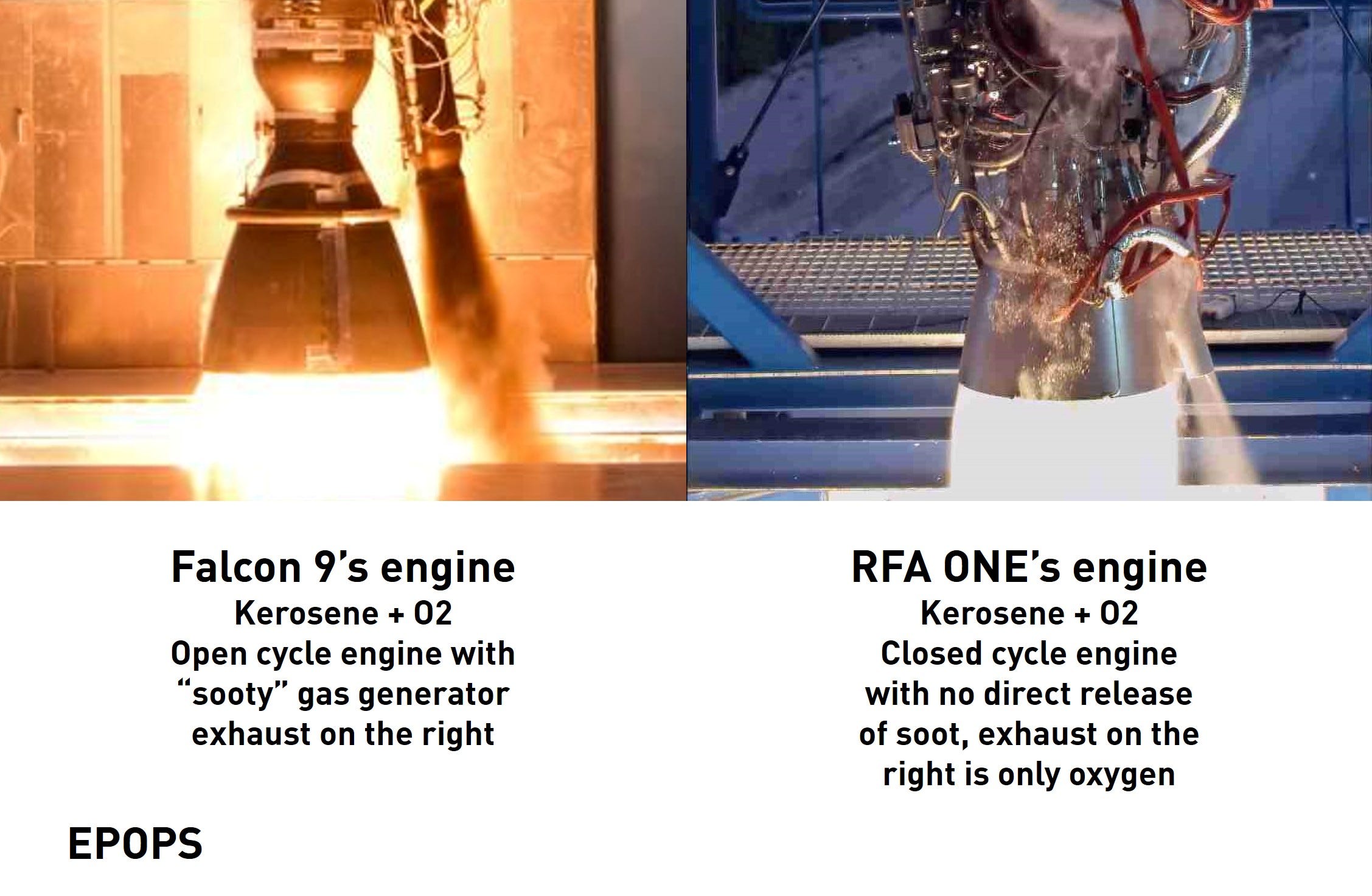
The reason why an open cycle engine releases a lot more soot, is that it uses a small percentage (usually 2-5%) of the entire kerosene+O2 flow to spin the turbopump of the engine. This mixture is very “kerosene-rich”, hence when it is released (with a small exhaust on the side), it is mainly soot (incompletely burned kerosene), and that’s also why it appears black.